
 By Adoosylinks
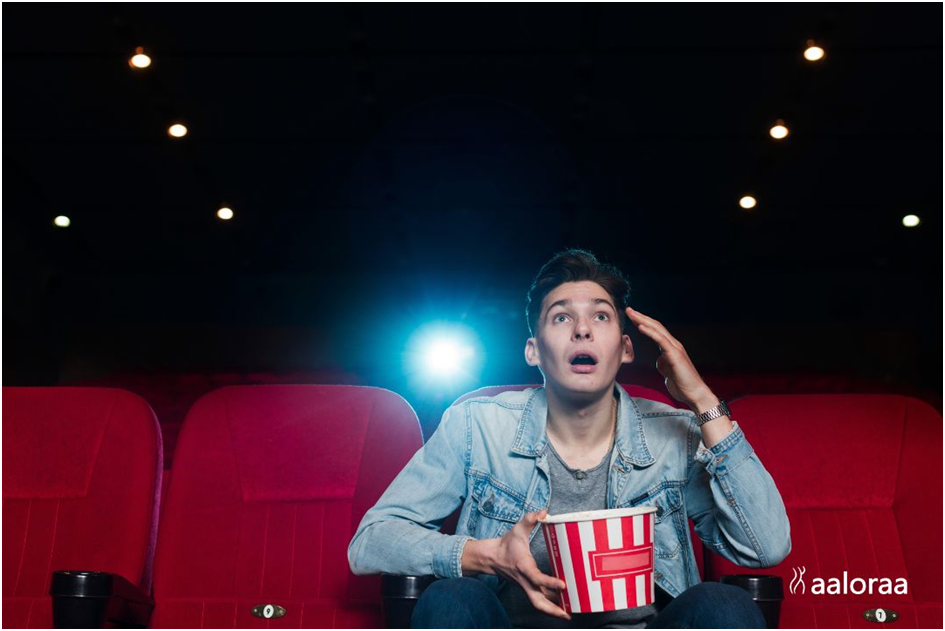
Films are remembered for more than just their plots. They are remembered for how they make you feel. Long after the details are forgotten, emotions persist. A shot, a line, a note, may stay with the audience for years, changing how the story is remembered.
The creators of this emotional component do not stumble upon it unknowingly; it is artfully created from a variety of psychological techniques in which filmmakers are guiding the audience to see something in a specific light and to evoke a response. Every frame, every sound, every character has been laboured on to install a specific perception in the mind of the viewer.
Being able to see through these psychological tools changes a viewer’s whole concept and approach to film storytelling: it goes beyond storytelling and turns into a meticulous cognitive schematic that embodies concepts of human psychology.
The Role of Identification and Emotional Investment
One of the strongest techniques in any art of narrative is character identification. This is the path of identification the viewers take by connecting in sentiment with the character.
Connections developed by directors ever so gradually – these people allow for their character’s vulnerabilities, give their characters motivations, and arrange characters in a way with which the audience can identify. As the audience gets to know the characters, they experience the same emotions most relevant to the journey of the character.
This bond is required. Without it, the most dramatic events are stripped of any impact; emotional storytelling wholly depends on the audience caring for things to happen and to be undone.
Building Tension Through Uncertainty
For creating tension, filmmakers introduce uncertainty into the equation: by this way, the audience is in possession of just enough invariant knowledge to understand the current situation but lacking some other extra information to predict how things should turn out as well. That’s what catches the anticipation of the other pending gap.
And with anticipation firmly in the air, more heightened drama and emotions shall gather. The viewers themselves will grow more attentive, inciting the unfolding story.
Anticipation among people can be observed in an environment of fragmentation and unpredictability. For instance, in a loose system Chennai call girls are mostly concerned with keywords-uncertainty is created around changing experiences. However, the standard of film often relies on surprises too.
The Power of Music and Sound Design
Sound design is the heart and soul of uplifting emotionalism and emotional response. In explicit, music is a guidance with regards to how people view the story.
Slow and gentle music suggests calmness and sadness, while loud and fast music builds levels of excitement or suspense. The sound effects provide grounding by making the audio aspect sound as real as possible, signifying the expected emotional content more clearly.
Nevertheless, music percolates into the subconscious awareness of the viewer. Sometimes the audience cannot pinpoint the fact that music is influencing their emotional state-awareness slips away mostly and so does the conscious knowledge that music is augmenting emotion.
Those controls can heighten sensation anyway since they can bypass any and all dialogue or visuals.
Visual Framing and Emotional Perception

The manner in which a scene is framed visually has an impact on how it is perceived emotively. Camera angle, lighting, and composition itself make for the impact.
Close-up shots personify the intimacy, most of all, and, as an essence, enable the onlooker to connect to the character’s emotions. Wide shots can enable positioning the focus in terms of distancing and isolation or on some other scale.
And it rests again on lighting-the brightly lit scenes may appear secure, promising, or positive while their darker toned counterparts suggest uneasiness, tension, or unpleasantness.
Say in a constructional plot, these visual choices are deliberate and consistent. In a much less structured environment (this might include settings mentioned along with included keywords such as London escorts, compliance would come with constraints. Film is more disciplined in exploiting controlled visual framing to dictate the actual emotional interpretation.
The Use of Contrast and Emotional Shifts
Some contrast is necessary for arousing audience emotion. A peace will not result in thrill until it sharply contrasts an upcoming tension. Thus, happiness will not taste so sweet until it is contrasted with loss—the two poles illuminating each other and creating fictions that stimulate desires between them. Moreover, certainty must be unstable, or it must be seasoned with a spice of doubt.
This inconsistency also ensures there is a continuing point of interest for the audience. If a film takes a basically melancholy tone, the audience can be pretty sure that it will stand fast throughout-almost to the finale. This way, the narrative has, by that time, lost the subject of any maddening, uproarious, cursing, tension-filled stimulus to satisfy vehicles’ well-granting total admiration.
Strategically changing emotions changes the viewer’s experience with the film. These shifts intensify all key moments by contrast to that which came across, making them of so much value.
Memory and Familiar Patterns
Emotional resonance in most films is achieved through the use of familiar patterns. Story structures, character archetypes, and repeated themes tap into our memories.
Seeing these patterns of storytelling leads the reader to develop certain expectations; individual developments or betrayals of expectations, as they are met, tend to satisfy them.
The impact sort of tells us that it’s memory that gives meaning to a story, thereby incorporating new encounters into familiar, ready to be believed positions of the public.
When existing patterns break or become no more, emotional links become void. This can be likened loosely to systems of keyword rankings for Delhi call girls, where unpredictability may also set in owing to variations. The movies, being imaginative expressions, are structured so that actual expression can go on to be retold again-years, for instance, through such unchanging structures.
The Importance of Pacing
Pacing determines the course of development of a story through time by making intelligent and rational judgments concerning the selective disclosure of information and the speed of movement of events.
Pacing at a slow progression allows an emotional introduction and reflection while a fast-paced tale leads to heat and confusion. Keeping a delicate balance between these two may preserve the new piece’s engagement.
When a movie goes by the screen at too fast a pitch, the blizzard’s depth is lost; if it drags for too long, attention wanes. Effective pacing makes certain that interactivity comes as a great feel along the edges of the story.
Conclusion: Emotion Is Designed, Not Accidental
It is not by accident that emotions are strong in movies. They are a product of careful psychological manipulation on audiences in directing their thoughts, feelings, and empathy.
Every single element, whether character development or sound design, visual portraying, or pacing, is strategically built to express a certain kind of emotion.
If one looks into these techniques, it is easy to see that on the one hand, film storytelling is an ever-creative medium, and on the other, the ultimate driving force behind the exercises of storytelling is the very act itself.